Sofia Matheu

One of the aromas that reminds me of my house back in Guatemala is café. Every morning my dad liked to grind and brew it. I remember waking up around 6 a.m. with that wonderful smell. Now in New York City, I can still purchase (for the triple amount I paid in Guatemala) café from Antigua Guatemala, one of Guatemala´s finest due to the altitude and the volcanic soil in which it is harvested.
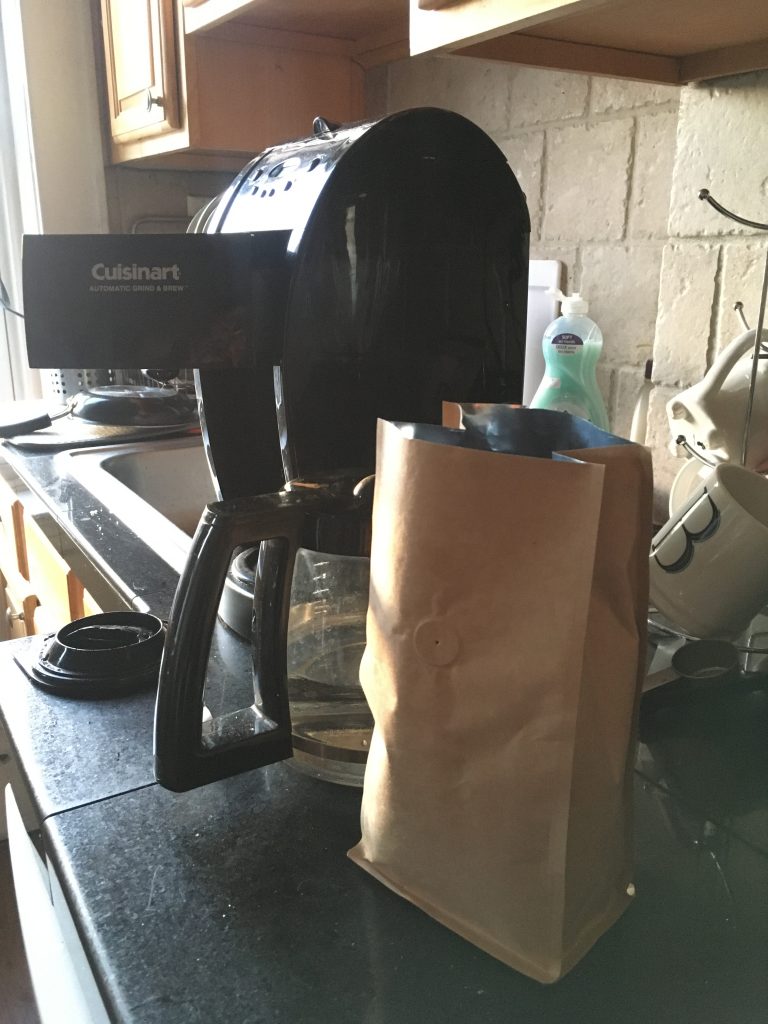
With this research I aimed to comprehend what is involved in the process of having a fresh brewed cup of café every morning, evening… and, in today’s case, night.
Guatemala has a distressing history — one that is circumscribed in the Conquest by the Spaniards (La patria del criollo), an international intervention where it was named as a Banana Republic (bitter fruit), and an internal war that lasted for 36 years (El martirio de una reina y la guerra de la verguenza). Economically, Guatemala was shaped by three products: bananas, sugar, and café. Café also molded Guatemala’s transportation infrastructure. The railroads were built to facilitate the connection of café “production centers, principal cities and villages with the Pacific ports, facilitating the flow of merchandise to world markets” (Wagner, 2001, p. 95).

Café is well known for being one of the factors that contributed significantly to the “development” of Guatemala’s economy through history. Nowadays it is still one of its largest export products, in 2019 it represented 5.9% of its exports, valued at US$662.4 million (Banco de Guatemala, 2019).
Café consumption has changed with its evolving production regimes, the shifts are noted as waves for Fisher, Victor and Asturias (2020, p. 3) “while these waves emerge sequentially, earlier ones were not replaced; that is to say, the current market is divided among First Wave, Second Wave and Third Wave cafés”. The first phase, or wave, of cafés was “associated with the spread of national brands for foodstuff” (2020, p.3) In Guatemala this process was effected through the exploitation and occupation of indigenous communal land (Castellanos Cambranes, 1996, págs. 47-70) and indigenous peoples’ forced labor. Sanborn (1886, p. 45) recalls in her book, a Winter in Central America and Mexico, how indigenous peoples were treated as “beasts of burden.” Cafés was transported from the “interior down to ports” on indigenous people’s backs; they carried “over a hundred pounds” through a distance of “twenty and twenty-five miles a day” for a payment of a “real” (twelve and one half cents of a dollar a day). “First Wave Coffee serves as a posterchild for economic dependency in world systems models” (Fisher, Victor & Asturias, 2020, p. 3) Late first wave consumption.
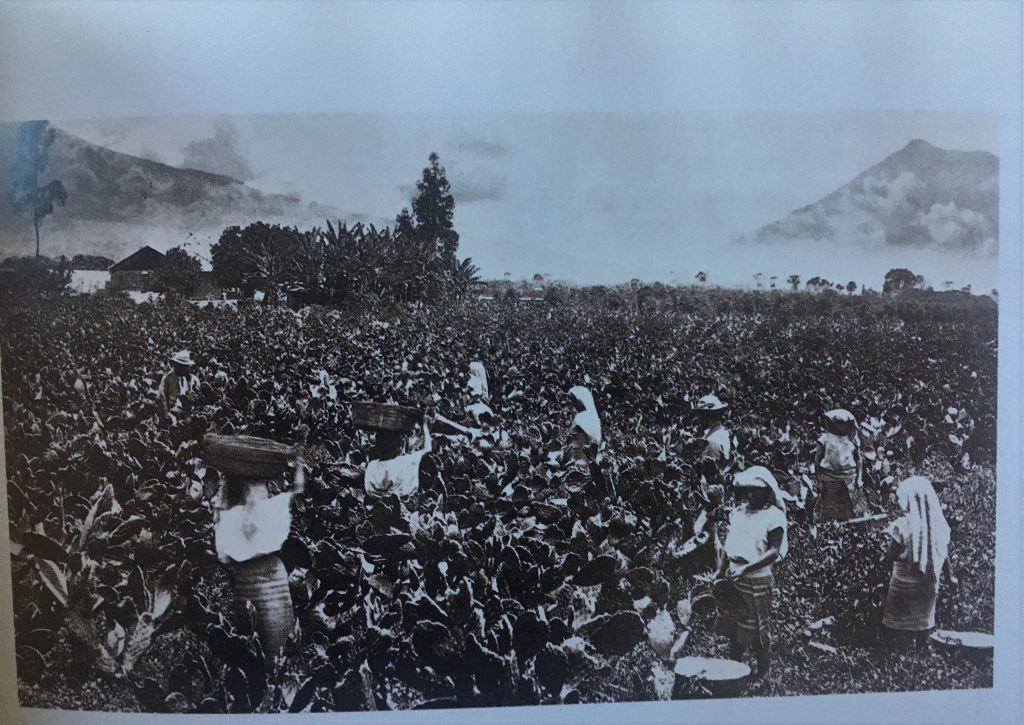
During the 1970s, the ongoing shift towards the Second Wave of the café’s life happened. Artisanal roasters and purveyors demanded a higher quality of washed[1] café arabica beans based on its “intense flavor and aroma” (procoffee, s.f.) . This process was accelerated during the 1990s and 2000s with the founding of local coffee shops in urban areas in the USA that “acquainted consumers with coffee more distinctive than the bland commodity sold in supermarkets” (Fisher, Victor & Asturias, 2020, p. 3).
One of the traits that differentiates First Wave to Second Wave cafés is the decommodification strategy that was used, in which café beans were distinguished based on the “geographic regions and broad flavor profiles” (Fischer, Victor, & Asturias, 2020, p. 3). In other words, café was sold due to its unique traits provided by the altitude where it was harvested, the geographical position in which the farm is placed, the crop rotation that is implemented in the farm, the soil and the type of processing methods that were used to wash it. contributing factors to café profile.
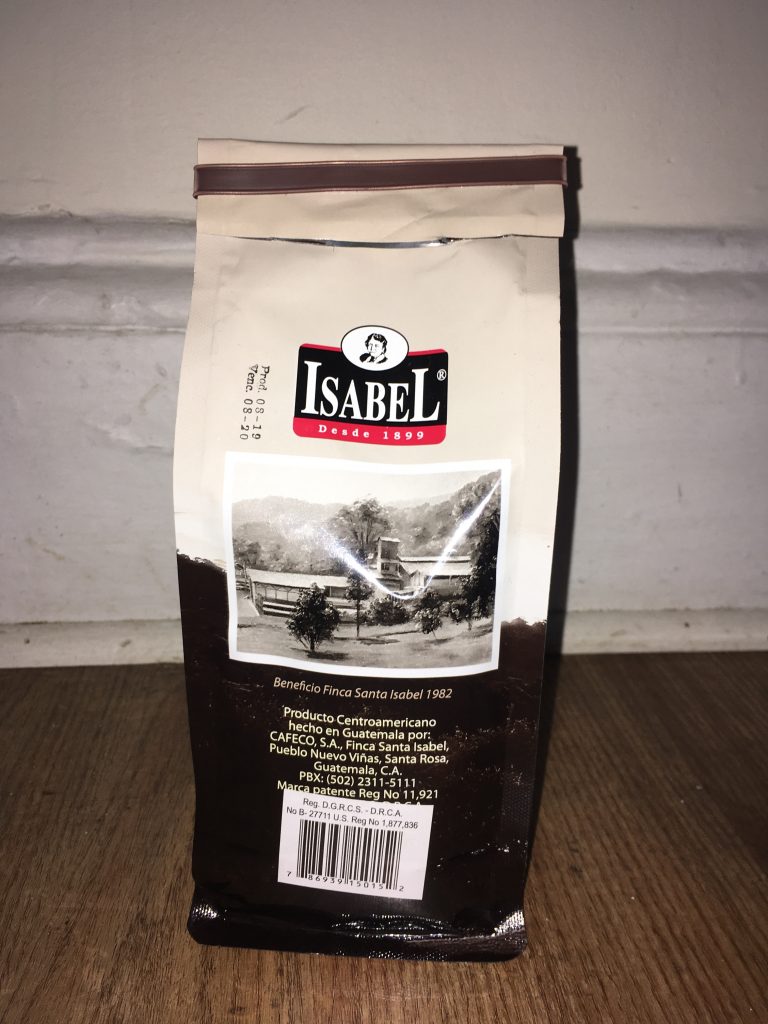
Other traits were embodied in the “high value on moral provenance, assuring customers that their café was bought at a fair price, to compensate those whose labor produced it.” I other words Fair Trade guarantee a “floor price” to producers (Fischer, Victor, & Asturias, 2020, p.4).
The third aspect of the Second Wave was the symbolic values that were represented as a connection to indigenous producers. The “Other” was revealed and their stories were finally told and known.
Finally, a concern for the environment was also manifested and an “artisanal commitment to quality” (Fischer, Victor, & Asturias, 2020, p.4).
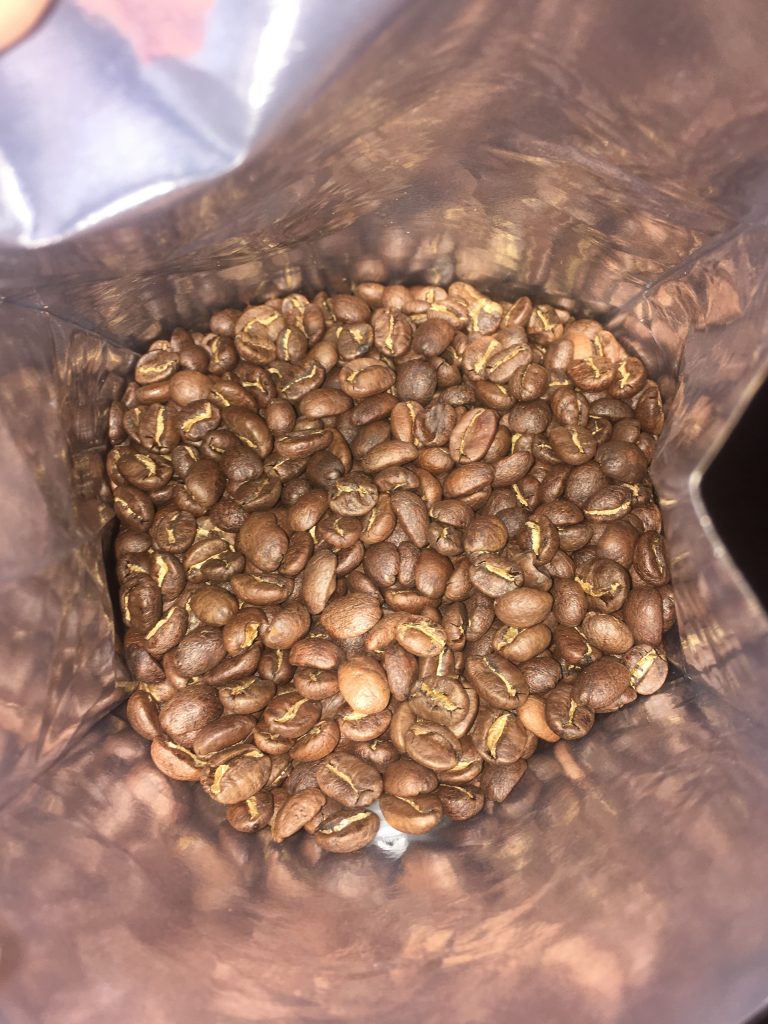
I am particularly interested in the Third Wave of the café´s life, which emphasized high-altitude and single origin production (Fischer, Victor, & Asturias, 2020, p. 4). The Third Wave is built upon the concerns that the second wave had emphasized such as Fair-Trade production conditions, symbolic aspects such as “a felt connection to an Other” and an interested in highly valuable exotic beans.
Even though the Third Wave had an enormous advance from the First Wave, this process is not detached from a neoliberal project in which smallholdings farmers are seeking an economic security and US consumers are expecting an experience while drinking café (Fischer, Victor, & Asturias, 2020, p.2-4).
Nonetheless, both producers and consumers have profit expectations in a capitalist market. There are overwhelming changes in the relationship between indigenous populations and means of production, from the First to the Third Wave. Cooperatives where smallholders gather to be more competitive, even though it has all the contradictions found in a human organization with political struggles, have allowed the café production of indigenous populations to be exported, recognized and demanded with a symbolic value.
Second and Third Wave Cafés from Guatemala, my country, arrive to New York City every day. Reading Nicola Twilley’s piece Spaces of Banana Control, made me wonder which are the processes involved in the logistics of transporting and storing café in the US. Twilley (2011) shares how bananas evolve from a “tropical treat “to become a “global commodity,” when bananas are treated to have a long travel from its harvest towards its final consumption their ripening process suffers an alteration. Bananas “natural” ripening cycle needs to be delayed until the refrigerated container, where they are shipped, gets delivered to its final destination.
In order to understand where our food comes from, I decided to talk to one of my friends who is a café roaster in New York City. His company is small but meaningful because they are not an ordinary business that only desires profit. They are in the business to accomplish social change as his owner states: “I want to leverage the community that gathers around the product to impact social change” (Coffee, 2020). Reflector Coffee Company is established in New Jersey and New York. Its name comes from “the fact that in order to have a reflection you need light and we usually associate light with good” (Coffee, 2020).
Its main goal is not only to get profit from buying and selling café; it also aims to have a social impact for the consumers and the origin farmers. Reflector aims to reflect “good people,” including both staff and customers; “good products,” which are sourced responsibly; and “good practices,” which requires thoughtful training of the people who are handling the product.
So, where does our café come from? Reflector Coffee Company gets its café from a Green Coffee Importer (GCI), who liaises with the café farmers. GCI´s train their staff to have a “good nose” to be able to taste and detect the quality of the café. They have an extensive scoring sheet, where quality score is based in the following criteria: lack of defects, sweetness, acidity, balance, mouthfeel and flavor; are scored to choose a café farm. After giving a score, see table No.1, to the café farm they also assign a price so roasters and buyers can bid over it. For more information see Red Fox Sustainable Harvest Long Miles.
| Table No.1 Specialty Coffee Association of America Coffee Quality Scores | |
| 65 – 80 = Commodity Coffee First Wave Café | The type used to make supermarket coffee, blends and instant. |
| 80+ = Specialty Coffee Second or Third Café Wave | The flavors are more subtle, the cup more balanced. At Pact we only buy coffees of 84+, though most of them score 86+. |
| 90+ = Presidential Award Second or Third Café Wave | These prestigious coffees make up less than 1% of the specialty coffee market, they’re just that rare. And that good. |
Source: (Pact Coffee, 2016)
Both Bananas and Café, are forced to adapt in order to have qualities that satisfy the market, they are subject to the demand. Café must score more than 86 points to be considered by its buyers. Bananas shades have popularity if they are between “2.5 and 3.5” (Twilley, 2011). In spite of the advantages that Second and Third Wave Cafés have brought to café farmers through fair trade, better labor conditions, smallholders, cooperatives and a concern for the environment, café farmers are conditioned by the market scores to obtain café prices, in other words the GCI´s, control the pricing (Fisher, Victor & Asturias, 2020, p.1).
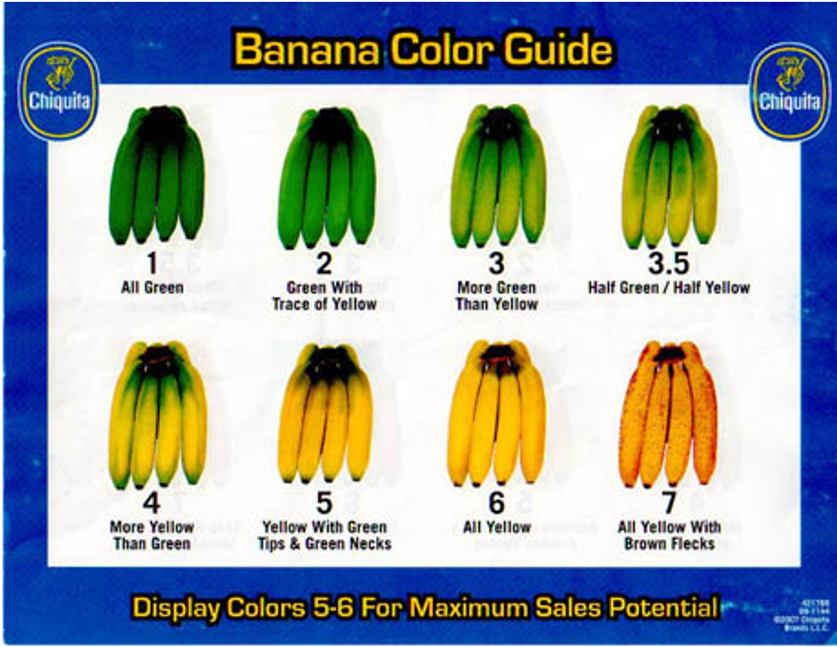
Going back to Twilley (2011) article. Café, as bananas, is also a “global commodity,” nonetheless it has a vague difference. The Second and Third Wave cafés demand from the farmers to treat their cafés according to the region and season where they are “naturally” harvested. After selecting the farm that will provide café, GCI creates a menu so roasters can decide which type of café they will purchase. Usually the menu has a regional and seasonal variation according to café’s seasonality. The seasonality trait contributes to the environmental care, because they are not forcing the land to produce the same type of café the whole year long, instead crop rotation is encouraged and treated as one of the remarkable traits that make café more valuable as it is showed in Kona Coffee Profile.
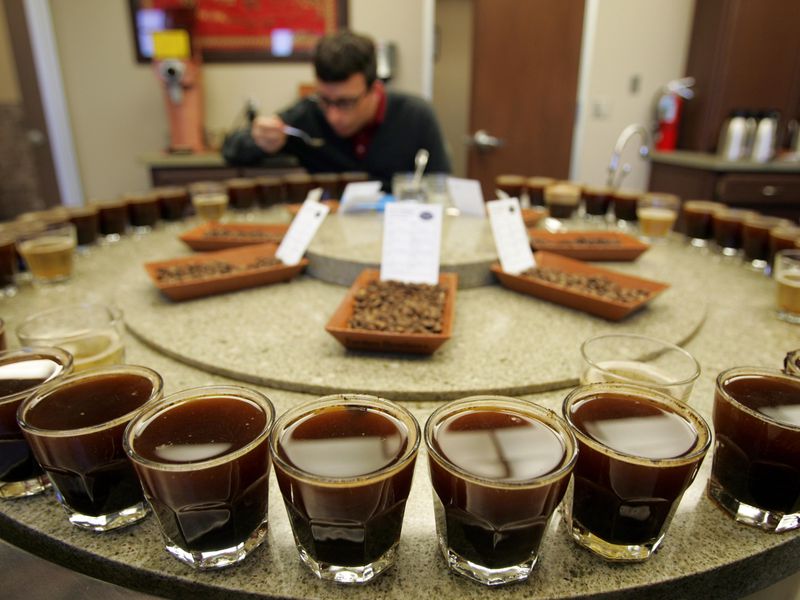
The menu helps roasters decide which type of café they want to use. GCI sends free samples to “cup it,” which means that green beans are roasted as a brand level. In other words, café is cooked at a same base that makes the flavor constant. Which allows the roaster to decide for the best café beans. Reflector Coffee Company cups its café using a scoring chart to recognize its flavor, aroma, vibrancy and after taste. “Scoring café will depend on the roaster and their vision” (Coffee, 2020).
After café farms are selected, café is packed in a grain pro bag. It is a green plastic material made to allow humidity to escape from the bag, but it doesn’t allow it to get in. The shipping package is very important because it assures that the café will arrive at its destination with the same quality that the sample had. If the package is not well handled, then the café may get moldy and this can cause the termination of the contract made between the roaster and the GCI.
One of the weaknesses that café transportation has is the number of intermediaries that are involved in the shipment. “The chain of transit is so long, there are a lot of places where it can go wrong” (Coffee, 2020). After arriving in the country of destination, café travels to different warehouse terminals, one of which is in New Jersey. After its arrival the inventory is loaded to a web page for GCI´s.
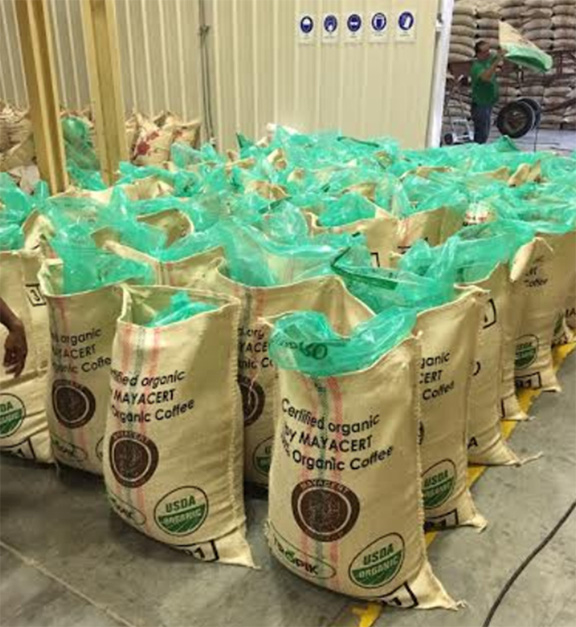

A small café roaster can do direct business with café farms, but there are a lot of contingencies that they need to consider. GCI benefits small café roasters by taking responsibility for the cost of transportation, accommodations in warehouses and the cost of losses(?). Larger companies are also part of this equation; since they have most of the market, they represent a competition challenge.
Reflector Coffee Company uses San José Poaquil HRNS Café because it comes from a Guatemalan cooperative that has 1000 smallholder’s café families in Chimaltenango. This community is one of the many places where the civil war of 36 years devastated indigenous populations “I use San José Poaquil HRNS because of the taste and the story… they are restoring their families to have an economic flourishing” (Coffee, 2020).
San José Poaquil HRNS, aims to “support the development of farmers groups, access to markets and essential services, strengthen bussiness practices, support the recovery from roya crisis and help to increase farm yields by sharing agricultural best practices for adapting to and mitigating the effects of climate change” (Guatemala San José Poaqul HRNS , 2020). See Interamerican Coffee.
I found it stunning that Reflector Coffee Company´s business plans exceed the third wave of café. It overtakes the trait of delivering an excellent quality of café taking into consideration the production, labor and environment; to impact their society through their business. As I write this, they are planning to establish a coffee shop in Harlem in the building of Living Redemption Ministries, where formerly incarcerated people in need of jobs have been receiving training and counseling. Reflector Coffee Company is willing to provide jobs to them to “be part of the story and have a positive impact on the origin farms, consumers and employees’” (Coffee, 2020).
[1] “Second Waves coffees are Arabicas. There are two main processing methods for coffee: washed and natural. For washed coffee, beans are de-pulped soon after the harvest to minimize the flavor changes that result from fermentation; Second Wave coffees are overwhelmingly washed Arabicas” (Fischer, Victor, & Asturias, 2020, pág. 3).
References
Banco de Guatemala . (2019). Nota al Comercio Exterior 2019. Obtenido de http://www.banguat.gob.gt/inc/ver.asp?id=/estaeco/ceie/CG/2019/nota_comercio_mensual.htm&e=143802
Castellanos Cambranes, J. (1996). Café y Campesinos Los orígenes de la economía de plantación moderna en Guatemala, 1853-1897. Madrid : Catriel .
Coffee, R. (14 de 02 de 2020). What they do to get their café? (S. Matheu, Entrevistador)
Fischer, E., Victor, B., & Asturias, L. (2020). Quality versus solidarity: third wave coffee and cooperative values among smallholding maya farmers in Guatemala . The journal of peasant studies , 1-18.
Guatemala San José Poaqul HRNS . (2020). Obtenido de https://www.interamericancoffee.com/guatemala-san-jose-poaquil-hrns/
Pact Coffee. (06 de 06 de 2016). Specialty Coffee: Quality Scores Explained . Obtenido de https://www.pactcoffee.com/blog/speciality-coffee-quality-scores-explained
procoffee. (s.f.). All about Caffea Arabica. Obtenido de https://procoffee.net/all-about-caffea-arabica/
Sanborn, H. (1886). A winter in Central America and Mexico . Boston : Lee and Shepard Publishers .
Twilley, N. (29 de 11 de 2011). Spaces of Banana Control . Obtenido de https://www.ediblegeography.com/spaces-of-banana-control/
Wagner, R. (2001). The history of coffe in Guatemala . Bogotá : Villega editores .